
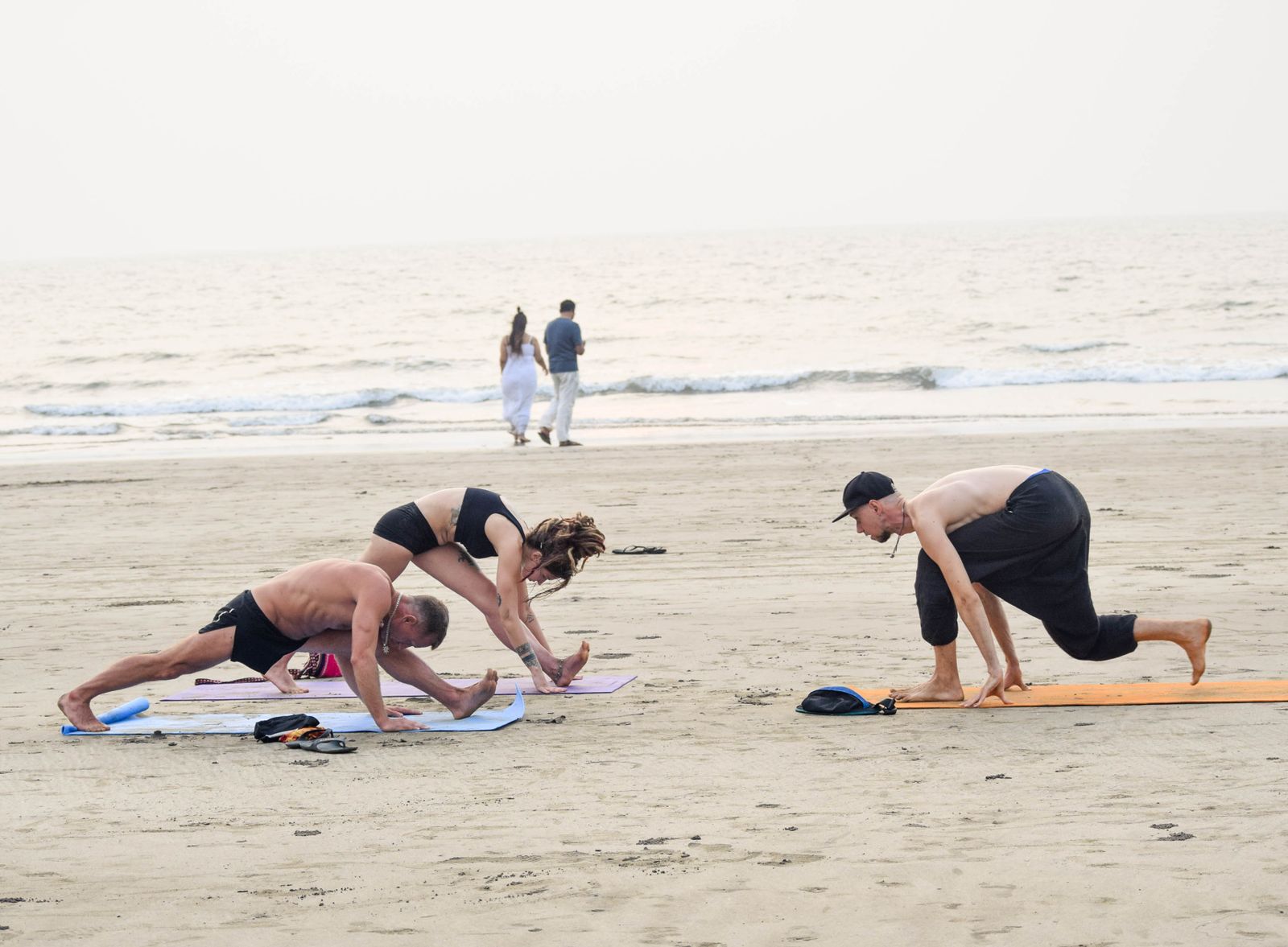
A yoga retreat in India can be a disciplined residential programme, a relaxed week by the sea, a mountain stay built around movement and meditation, or one part of a wider holiday. The right choice depends less on the number of classes advertised and more on the teaching, pace, setting and amount of freedom you want.
Choose the purpose and daily rhythm before choosing the destination.
Begin with the kind of experience you want
A retreat is different from a yoga teacher-training course. Teacher training usually follows a curriculum, assessment and attendance requirements. A retreat may be suitable for beginners or experienced practitioners and can leave more time for rest and travel. Ask whether classes are optional, which styles are taught, how large the group is and whether individual needs can be accommodated.
Compare India's yoga settings
Rishikesh is associated with ashrams, schools and structured study. Goa combines practice with the coast and a more holiday-like rhythm. Dharamshala and the Himalayan foothills bring cooler air, walking and mountain quiet. Kerala often places yoga alongside Ayurveda. The setting changes the experience, but it does not establish the quality of the teaching.
Check the season as carefully as the programme. Heat, monsoon rain, altitude, road travel and local festival periods can affect the pace of a stay. Leave recovery time after a long flight and avoid building a route that moves every few days.
Ask who teaches and how
Request the teacher's name, experience, training and the style and level of each class. A certificate can be one useful signal, but it does not replace clear communication, safe instruction and a programme appropriate for the group. Tell the teacher about injuries, pregnancy or relevant limitations through the retreat's proper process before taking part.
Understand the complete daily rhythm
Compare the number and length of sessions, meditation or breathwork, meal times, silence expectations, excursions and unstructured hours. A full schedule can suit someone seeking immersion; another traveller may value one considered session followed by time to experience the destination.
Confirm what the price includes
Ask for the room category, meals, classes, private sessions, equipment, airport transfers, excursions, taxes and cancellation terms in writing. Confirm whether the programme is a fixed departure or can be adapted, and whether international and domestic travel are separate.
Decide between a retreat and a wider journey
A residential retreat offers repetition and fewer logistics. A hosted journey can connect yoga with cities, nature, food and other wellness or personal-care appointments. Prana places Himalayan movement within a route between Mumbai and Dharamshala; Sama makes room for yoga by the coast between Bengaluru and Wayanad. Neither is presented as an intensive yoga retreat or teacher-training programme.
Yoga can support wellbeing, but it is not a substitute for necessary medical care. The Leisure Health confirms the actual teacher, sessions, stays and inclusions in the written itinerary before a guest commits.
Practical questions
Questions travellers ask
Which part of India is best for a yoga retreat?
It depends on the desired rhythm. Rishikesh suits structured study, Goa pairs yoga with the coast, Dharamshala offers a mountain setting, and Kerala often combines yoga with Ayurveda.
Is a yoga retreat suitable for beginners?
Many are, but the level, group size, teaching style and ability to adapt practice should be confirmed before booking.
How long should a yoga retreat in India be?
A focused stay may last several days, while a more immersive programme can take one or two weeks. International travellers should also allow time for arrival, internal travel and rest.