
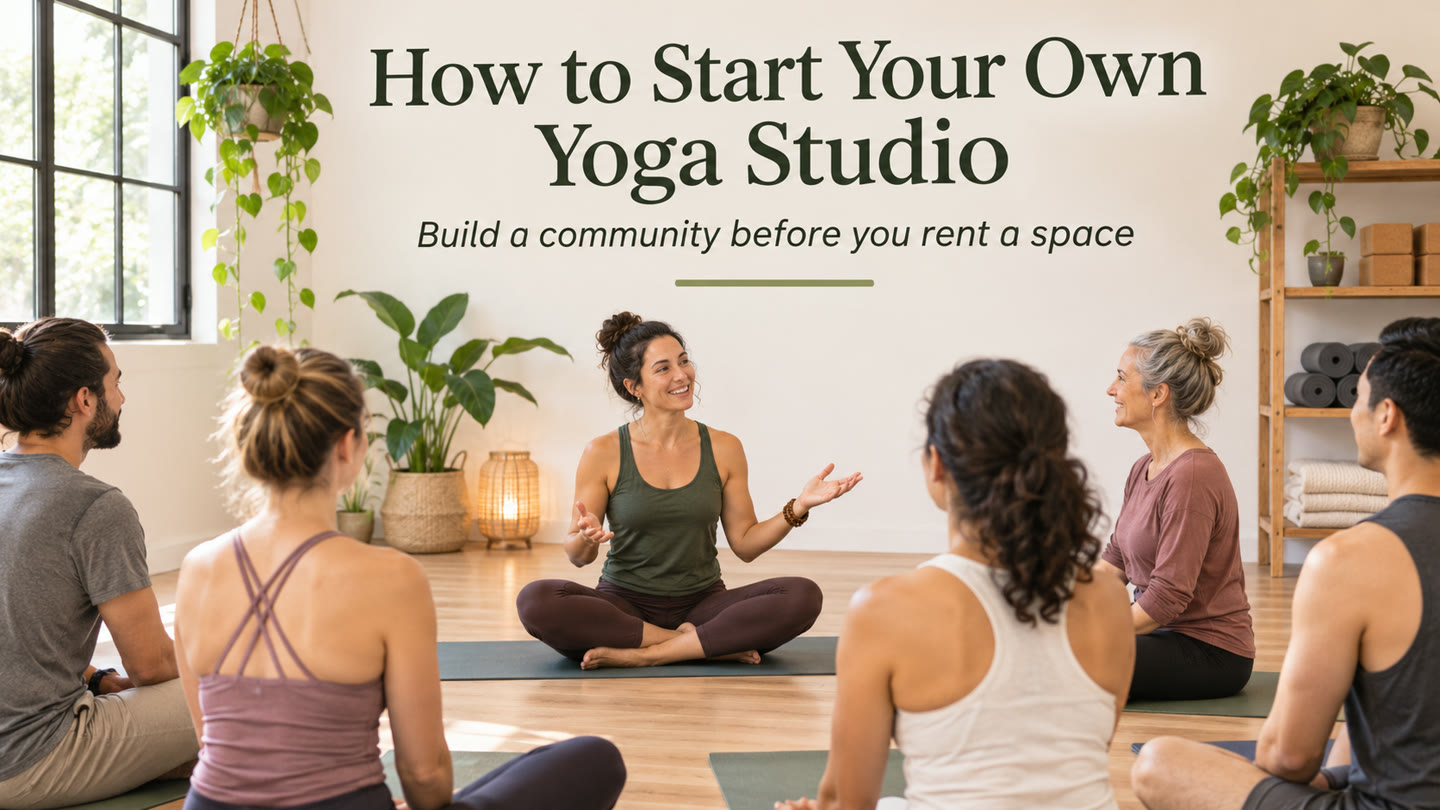
Thinking about opening your own yoga studio? Here's a practical, low-investment approach to attracting your first students, building a community and creating a sustainable business before signing a lease.
Opening a yoga studio is a dream for many yoga teachers.
You imagine a beautiful space filled with natural light, peaceful interiors, yoga mats and a community of people coming together to practise.
But there's one problem.
Many aspiring studio owners begin by investing in the space, rather than finding the people who will fill it.
They rent a property, renovate the interiors, purchase equipment, create a website and start marketing. Only then do they begin looking for students.
What if you reversed the process?
Instead of investing thousands of dollars upfront, start by building a yoga community, understanding what your students need and generating recurring revenue.
Here's how you can do it.
Step 1: Start Teaching Before You Have a Studio
You don't need a permanent yoga studio to start teaching.
Find a nearby park, community space or another suitable venue where you can organise a one-hour yoga session.
Invite 5–10 friends, family members, neighbours or acquaintances to attend.
Your objective isn't to make money immediately. It's to understand whether people enjoy your classes and would return.
Start with beginner-friendly sessions that make participants feel welcome, regardless of their experience level.
After each session, ask three simple questions:
- What did you enjoy most about the class?
- What could make the experience better?
- Would you attend something like this every week?
The answers will help you understand what your initial audience values.
Important: Check local permissions before using public spaces for organised activities, ensure you have appropriate insurance and follow safe teaching practices.
Step 2: Document Your Classes and Build Your Online Presence
Your first yoga sessions are also an opportunity to create authentic marketing material.
Ask a friend to take pictures and short videos during the sessions, with permission from everyone being photographed.
Capture natural moments: people practising together, your teaching style, the surroundings and the sense of community.
Use this content to create:
- An Instagram page for your classes
- A simple website or landing page with your schedule and contact details
- Digital posters for your local community
- Student testimonials, with their consent You don't need an expensive website.
A basic page introducing yourself, explaining who your classes are for, sharing your schedule and providing a simple booking link is enough.
Your first marketing materials should show real people experiencing your classes, rather than relying entirely on stock photographs.
Step 3: Reach People Who Already Care About Wellness
One of the most cost-effective ways to find new students is to become part of an existing community.
Instead of relying entirely on Instagram advertisements, approach organisations and groups where your potential students already gather.
Running clubs and marathon groups
Offer a short post-run yoga or mobility session, focusing on gentle movement and recovery.
Many runners are interested in flexibility, mobility and complementary wellness activities.
Community events
Participate in neighbourhood wellness events, residential community activities and local health initiatives.
Offer a short introductory class to help people experience your teaching style.
Existing yoga studios
Collaborate with studios as a guest teacher or offer a workshop in a particular area of yoga.
This can help you build teaching experience and connect with students who might be interested in your future programmes.
Wellness stores and cafés
Approach local businesses about hosting small workshops or promoting your upcoming sessions.
Choose partners whose customers are likely to be interested in yoga.
The objective is simple: put yourself in front of relevant people without spending heavily on advertising.
Step 4: Build a Community Before You Build a Business
After a few sessions, some participants will naturally want to stay in touch.
Create an opt-in WhatsApp community where interested students can receive updates and interact with you.
Use this group to share:
- Upcoming yoga classes and locations
- Simple wellness and yoga tips
- Short educational videos
- Invitations to community events
- Occasional feedback questions
Avoid using the group only to promote or sell your classes.
Encourage conversations and help participants get to know your teaching philosophy.
Over time, a small, engaged community can become the foundation of your future studio.
A group of 30 people who know you and regularly attend your classes can be more valuable than thousands of passive social media followers.
Step 5: Start Hosting Paid Weekly Yoga Classes
Once you've conducted a few introductory sessions and received positive feedback, start testing paid classes.
Don't wait several months before charging. You need to understand whether people are willing to pay, not just whether they enjoy free yoga.
Find an affordable space that can be rented by the hour.
This could be a community hall, a dance studio during its unused hours, a wellness centre or a suitable multipurpose room.
Start with one or two weekly classes at times that work for your audience.
How to promote your weekly classes
Create a simple poster featuring a real photograph from your previous sessions.
Include your name, location, timings, price, contact details and a booking link or QR code.
Ask permission to display these posters in nearby wellness stores, cafés, apartment buildings and community spaces.
You can also run small, location-targeted Instagram campaigns using photos and videos from your sessions.
At this stage, promote the experience itself.
Instead of advertising long-term subscriptions, invite people to join a weekly class and discover whether your teaching is right for them.
Make payment and booking as easy as possible.
Step 6: Find Your First Recurring Members
After running paid weekly sessions, begin exploring recurring memberships.
Speak with participants who attend regularly.
Ask whether they would be interested in practising two or three times a week, what timings work best, and what they would be comfortable paying monthly.
You can also test a founding-member offer with a limited number of places.
For example, someone attending weekly classes may be interested in an eight-class monthly package.
The most important distinction is between someone who says they would join and someone who actually pays.
Aim to establish a small base of committed, recurring students.
You might initially target 10–15 paying members, but that number alone does not determine whether opening a studio is financially viable.
Your pricing, space costs, teaching expenses and expected attendance are what matter.
Step 7: Calculate Your Break-Even Point Before Renting
Before signing a lease, understand how much monthly revenue your studio needs to survive.
Here's a hypothetical example, using US dollars.
| Monthly expense | Estimated cost |
|---|---|
| Studio rent | $800 |
| Utilities, insurance, cleaning and marketing | $300 |
| Teaching compensation | $500 |
| Total monthly costs | $1,600 |
Suppose you charge $100 per month for a membership and retain approximately $95 after variable costs and payment fees.
You would need approximately 17 paying members to break even.
With 15 members, you would still be operating at a loss.
With 20–22 members, you would have a modest operating buffer, although taxes, unexpected costs and any additional expenses would still need consideration.
These numbers are illustrative, not a pricing recommendation. Actual costs will vary significantly by city and business model.
Consider one-time costs too: security deposits, permits, equipment, legal fees and fit-out expenses.
A useful rule is to secure enough committed revenue to cover expected operating costs, while maintaining cash reserves for slower months.
Your first goal shouldn't be to open the biggest studio possible. It should be to build one that can survive financially.
Step 8: Choose the Right Location for Your First Studio
Once recurring demand is established, you can begin exploring permanent locations.
Prioritise convenience, atmosphere and affordability over size or expensive interiors.
Look for a space with:
- Natural lighting and good ventilation
- A peaceful environment with limited external noise
- Easy access from residential neighbourhoods
- Clean washrooms, safe flooring and drinking water
- Adequate space for comfortable movement
- Appropriate access, safety and local business permissions
Ideally, choose a location close to where most of your existing students live or work.
A beautiful studio across town may be less appealing than a smaller, convenient studio that people can visit consistently.
Before committing, verify that the property can legally be used for your intended activities and understand the lease terms, deposit and exit conditions.
If possible, negotiate flexible terms rather than taking on a long lease immediately.
Step 9: Keep Your Initial Studio Setup Simple
You don't need elaborate interiors to create a memorable yoga experience.
Start with the essentials:
- Yoga mats, blocks, straps and a few bolsters
- Clean storage and organised equipment
- Comfortable lighting and ventilation
- Simple, calming décor
- A functional reception or check-in area
Add equipment gradually as student demand grows.
For example, if you discover that your community enjoys restorative yoga, you can invest in more bolsters, blankets and meditation cushions.
If you specialise in yoga for runners, your space and props may look different.
Let your students' needs guide your purchasing decisions.
Good teaching, a welcoming environment and consistency matter more than expensive decoration.
Step 10: Retain Students Before Expanding
Opening a studio is only the beginning.
A successful yoga business depends not only on getting new students but also on encouraging existing students to return.
Track a few simple numbers every month:
- Number of first-time students
- Percentage who return for another class
- Number who purchase a recurring package
- Average attendance per session
- Monthly revenue, expenses and available cash
Continue engaging your community through WhatsApp, workshops, educational content and occasional special events.
Consider introducing new class formats based on demand, such as beginner courses, weekend workshops, meditation sessions or yoga for runners.
You can eventually explore additional revenue streams, including wellness merchandise, private sessions and retreats.
But avoid introducing too many offerings before your core classes are stable.
A Practical 90-Day Launch Plan
Here's one way to organise your first three months.
| Timeline | What to focus on |
|---|---|
| Days 1–30 | Run introductory classes, gather feedback, capture content, create Instagram and start building your opt-in community. |
| Days 31–60 | Collaborate with local groups, launch paid weekly classes, distribute posters and test booking and pricing. |
| Days 61–90 | Develop recurring memberships, identify your most popular class slots, calculate break-even and assess whether a permanent space is justified. |
This is a suggested roadmap, not a deadline.
Some teachers may need six months or longer before they have enough consistent demand to justify a lease.
Others may discover that operating through rented spaces is more profitable and flexible than maintaining a permanent studio.
Both outcomes can be successful.
Final Thoughts: Your Community Is Your First Studio
Starting a yoga studio doesn't have to begin with a large investment.
You can start with a yoga mat, a suitable space and a handful of people interested in practising together.
Teach consistently. Build relationships. Understand your students. Charge for your services. Grow a recurring community.
Then, when the numbers make sense, invest in a space that can support that community.
Don't start by building a studio and looking for students. Start by building a community that makes a studio worth opening.
How The Leisure Health Can Support Your Yoga Business
At The Leisure Health, we help yoga teachers, studios and wellness entrepreneurs bring their ideas to life.
Whether you're setting up your first studio or expanding an existing one, we can help you source yoga mats, bolsters, blocks, straps, meditation accessories and other wellness products from India.
Custom branding, order quantities and delivery arrangements depend on the product and destination. Discuss your requirements with our studio sourcing team for a written quotation.
Build your community. We'll help you source the products to support it.
Explore our offerings at theleisurehealth.com.